

By Mark Armbruster
I’ve run a few marathons, but it was many years ago. However, I still remember them well. The first eighteen miles or so were pretty easy and the last six to eight were a death march. Sports science wasn’t as advanced, and we didn’t know as much about fueling, nutrition, and hydration, which it turns out, are as important as being in good shape. Since then, there are whole new thoughts about how to fuel, and the running gels and drinks today are much more complex.
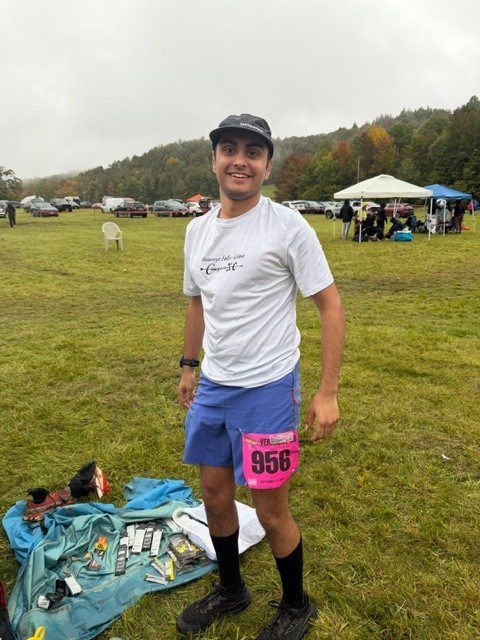
My boys, Omar and Amer, know all about this stuff. I’ve written a number of times before about their Nordic ski races, but they have also gotten into following the ultramarathon circuit. They know all the runners, can tell you in detail about all the racecourses, and have studied the strategies, equipment, and nutrition required to complete such a race. The kids are so into this that on a recent trip to Colorado we trekked up to watch the Leadville 100 and trust me that ultramarathoning is not a spectator sport.
Ultramarathons include anything longer than a traditional marathon, which is 26.2 miles. However, typically an ultra will be 50 kilometers (31 miles), 50 miles, or 100 miles. Some of the elite races are even longer.
Omar now lives in Boulder, Colorado, where he has immersed himself in the endurance community. He did his first 50-mile run last year almost by accident. There’s a group that competes over the course of three weeks to see who can run the most laps of a 0.3-mile course. Google “Burrito League” if you have an interest. Omar showed up for the last day and got carried away with the big group of endurance junkies that showed up. He’d never run a marathon or 50-kilometer race but ended up doing over 50 miles that day.
Not to be outdone, Amer decided to sign up for the Vermont 50, a trail race that not only covers 50 miles, but also climbs almost 9,000 feet of elevation. For comparison, the tallest mountain east of the Mississippi is Mount Mitchell in the Appalachians at 6,684 feet.
A few weeks before the race, Amer asked if I would come out and crew for him. It is not uncommon for ultra runners to have crews who meet them at the designated aid stations and help refill water bottles, swap out used gels for new ones, offer clean and dry clothes, and generally help make the transition efficient so the racer can get back to running.
I’ll usually take any excuse to go to Vermont, and I’ll do whatever I can to make it to my kids’ races. But when I checked my calendar, I noticed that I already had a prior commitment, so I put the race out of my mind.
Then, I got sick. And after a few days when I was starting to feel better, Nipa got sick (and she says I never give her anything). That put an end to our prior commitment, and a few minutes later I remembered the race. With no thought about my ailing wife, I announced that I was going to Vermont tomorrow.
I packed up my old truck on Saturday morning with a rain tent, chairs, and all manner of equipment that could potentially come in handy and set off for Vermont. We stayed at a hotel to be closer to the race venue, but we still had to wake up at 4:00 am to get there on time. These races start early since they take many hours to complete.
The morning of the race was dark and rainy. Amer was in good spirits, but it was not ideal conditions. He set off at 6:30 and I walked back to the truck to find my way to the first aid station.
The state of Vermont seems to have something against cell service, so I was using a map and directions from the race organizers to find my way on some pretty rural roads. The first aid station was 12 miles in, and I arrived early enough to get everything set up. I had two kinds of gels laid out, as well as the various water bottles with carbohydrate and electrolyte drinks. It was going to be important for Amer to consume at least 4,000 calories during the day, and these synthetic “foods” would make up the bulk of that. I figured only 12 miles in he wouldn’t want to change any clothes, so I kept all that dry for now. He came through doing 11:15 pace, we made sure he was well supplied, and I sent him off for the next 18 miles.
I drove to the next aid station, and doing a little math, realized I probably had four hours until Amer came through. With no cell service, I entertained myself with rural radio stations and watching the race leaders while bundled up in my rain gear. It wasn’t the most fun I’ve ever had, but compared with the racers, my complaints were trivial.
There were two more aid stations and by the last one, at mile 47, Amer was looking pretty ragged. On the one hand there were only three miles left, but on the other, there were still a lot of hills. I told him he had a fighting chance at breaking 11 hours if he hurried, and I made sure he got a new drink belt with a pocket full of fresh gels so he wouldn’t have to waste any time.
Somehow, Amer picked up the pace and did really well for what must have been agonizing final miles. He finished in 11 hours and 7 seconds. He really didn’t care about the time or even have a goal. He was just happy to finish and count the accomplishment.
We celebrated with a 2,000-calorie dinner at Five Guys and crashed out at the hotel around 8:15.
The weekend included a lot of driving, standing in the cold and rain, hours of boredom, and really only seeing a few minutes of Amer actually racing. Such is ultramarathon spectating, and I was deliriously happy to be part of it. I’ll remember it forever.